Anti-Bloating Foods for Women After Delivery: Complete Postpartum Guide
Motherhood is one of the most beautiful and challenging journeys a woman can experience. While the arrival of a newborn brings immense joy, it also brings physical and emotional challenges, including hormonal fluctuations, digestive issues, water retention, and postpartum bloating.
For many women, bloating after delivery is a common issue. It can cause discomfort, heaviness, and interfere with daily activities, making the early postpartum weeks even more challenging. The good news is that proper nutrition, hydration, and lifestyle adjustments can significantly reduce bloating and improve overall well-being.
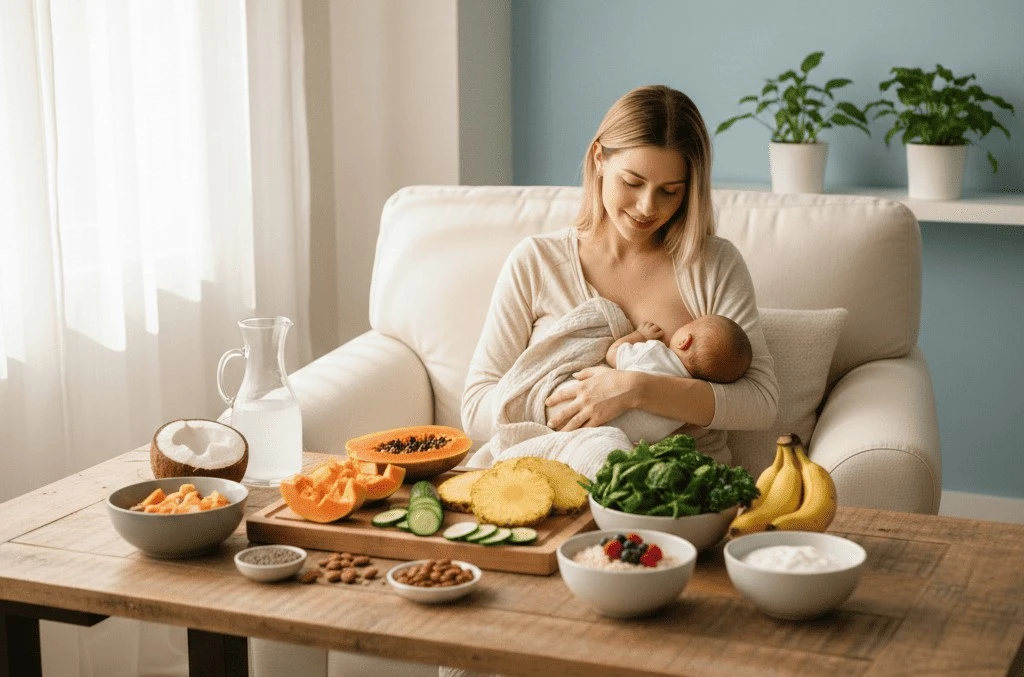
Understanding Postpartum Bloating
Bloating after childbirth is a natural and common occurrence, but it can be aggravated by poor dietary habits, hormonal shifts, dehydration, and lack of physical activity.
Causes of Postpartum Bloating
- Hormonal Changes
During pregnancy and after delivery, hormones like progesterone remain elevated. Progesterone relaxes the digestive muscles, slowing down bowel movements and causing bloating. - Water Retention
After delivery, your body may retain fluids to heal tissues and maintain hydration, especially if you had a cesarean delivery or significant swelling during pregnancy. - Constipation
Reduced mobility, pain medications, or iron supplements may lead to constipation, which can increase abdominal swelling and gas. - Gas Accumulation
Certain foods, including beans, carbonated drinks, and cruciferous vegetables, can produce gas and worsen bloating. - Cesarean Section
Recovery from C-section surgery can cause abdominal swelling, slower digestion, and temporary bloating.
Understanding the underlying causes helps in targeting your diet and lifestyle to alleviate bloating effectively.
Key Principles for Reducing Postpartum Bloating
While diet is central, a holistic approach is essential. Here are some principles every new mother should follow:
- Eat Small, Frequent Meals
Large meals put pressure on the digestive system and can lead to gas accumulation. Eating 5–6 small meals supports efficient digestion. - Stay Hydrated
Water is crucial for flushing out excess sodium and reducing bloating. Aim for at least 3–3.5 liters of fluids daily, including water, herbal teas, and coconut water. - Include Fiber-Rich Foods
Fiber promotes smooth bowel movements and prevents constipation, a major contributor to bloating. - Include Probiotics
Fermented foods like yogurt or kefir help maintain a healthy gut microbiome, improving digestion and reducing gas. - Avoid Gas-Producing Foods
Limiting carbonated drinks, processed snacks, and certain vegetables can prevent bloating spikes.
Top Anti-Bloating Foods for Women After Delivery
Eating the right foods can support digestion, reduce inflammation, and relieve bloating naturally. Here’s a detailed breakdown:
Food | Benefits | How to Include |
Papaya | Contains papain enzyme that aids digestion and reduces constipation | Fresh slices after breakfast or as a snack |
Pineapple | Bromelain enzyme helps reduce inflammation and bloating | In fruit salads or smoothies |
Cucumber | High water content, reduces water retention | Raw in salads or smoothies |
Ginger | Stimulates digestion, reduces gas, nausea | Ginger tea, grated in meals, or added to soups |
Fennel Seeds (Saunf) | Carminative; naturally relieves gas | Chew after meals or brew fennel tea |
Yogurt / Probiotics | Restores healthy gut bacteria | Include plain yogurt with meals or as a snack |
Banana | High in potassium, balances sodium, reduces water retention | Snack or in smoothies |
Oats | High fiber, supports digestion | Oatmeal with fruits or nuts for breakfast |
Leafy Greens (Spinach, Kale) | Fiber-rich, prevents constipation | Salads, sautéed, or in soups |
Asparagus | Natural diuretic, reduces water retention | Steam or lightly sauté |
Watermelon | Hydrating, reduces bloating and swelling | Snack or part of smoothie |
Carom Seeds (Ajwain) | Improves digestion, reduces gas | Add in cooking or boil for water |
Coconut Water | Hydrates and replenishes electrolytes | Drink between meals |
Mint / Peppermint | Soothes the digestive tract | Add to teas or meals |
Foods to Avoid to Prevent Postpartum Bloating
While incorporating anti-bloating foods, it’s equally important to avoid foods that aggravate bloating:
Food Category | Why Avoid |
Carbonated drinks | Introduce gas into the digestive system |
Deep-fried & processed foods | Heavy, slow to digest, increase inflammation |
Excess sugar | Fermentation in gut causes gas |
Raw cruciferous vegetables (cabbage, broccoli, cauliflower) | Can cause gas and bloating in sensitive stomachs |
Excess salt | Causes water retention and swelling |
Artificial sweeteners | Can trigger bloating and gas in some people |
Sample 7-Day Anti-Bloating Meal Plan for New Mothers
Day 1
- Breakfast: Oatmeal with banana slices + ginger tea
- Mid-Morning Snack: Papaya or pineapple chunks
- Lunch: Multigrain roti + steamed spinach + grilled paneer + cucumber salad
- Evening Snack: Yogurt with chia seeds + coconut water
- Dinner: Steamed asparagus + dal + brown rice
- Bedtime: Warm fennel tea
Day 2
- Breakfast: Moong dal cheela + mint chutney
- Mid-Morning Snack: Watermelon slices
- Lunch: Brown rice + rajma + cucumber & carrot salad
- Evening Snack: Roasted almonds + ginger tea
- Dinner: Steamed zucchini + grilled chicken + quinoa
- Bedtime: Mint tea
(Continue variety for Days 3–7 with rotation of leafy greens, lean proteins, and fruits.)
Lifestyle Habits to Reduce Postpartum Bloating
Nutrition alone is not enough. Combining diet with healthy lifestyle habits maximizes results:
- Gentle Walking: Activates digestion and reduces gas accumulation.
- Postpartum Yoga: Poses like Cat-Cow and Wind-Relieving Pose help relieve bloating.
- Avoid Lying Down Immediately After Meals: Helps prevent digestive slow-down.
- Chew Food Slowly: Promotes digestion and reduces swallowed air.
- Abdominal Massage / Warm Compress: Gentle tummy massage improves circulation and reduces .
Common Postpartum Digestive Issues and How to Address Them
- Low Milk Supply Due to Bloating
- Stay hydrated and include galactagogue foods like oats and fenugreek.
- Constipation
- Add fiber-rich foods (oats, fruits, leafy greens) and drink plenty of water.
- Gas and Cramping
- Use ginger, fennel, and mint in diet to improve digestion.
- Water Retention
- Limit salt intake, drink coconut water, and consume potassium-rich foods like bananas.
Frequently Asked Questions (FAQs)
Typically, bloating reduces within 2–6 weeks post-delivery, depending on diet, hydration, and activity.
Yes, but gas-producing vegetables should be lightly cooked or steamed.
Yes, probiotic foods like yogurt restore gut bacteria and improve digestion.
Absolutely. Proper hydration reduces water retention and supports digestion.
Yes, ginger reduces gas, nausea, and digestive discomfort. It’s safe for breastfeeding mothers.
Conclusion
Postpartum bloating is a common but manageable condition. By focusing on anti-bloating foods, proper hydration, and supportive lifestyle habits, new mothers can reduce discomfort, improve digestion, and accelerate recovery after delivery.
Key takeaways:
- Include papaya, pineapple, cucumber, ginger, fennel seeds, yogurt, leafy greens, oats, and bananas in daily meals.
- Avoid processed foods, excess salt, carbonated drinks, and raw gas-producing vegetables.
- Drink plenty of water, practice gentle movement, and prioritize rest.
- Combine diet with postpartum yoga, walking, and mindful eating for best results.
With consistent effort, a well-planned anti-bloating diet helps new mothers feel lighter, energetic, and ready to embrace motherhood fully.