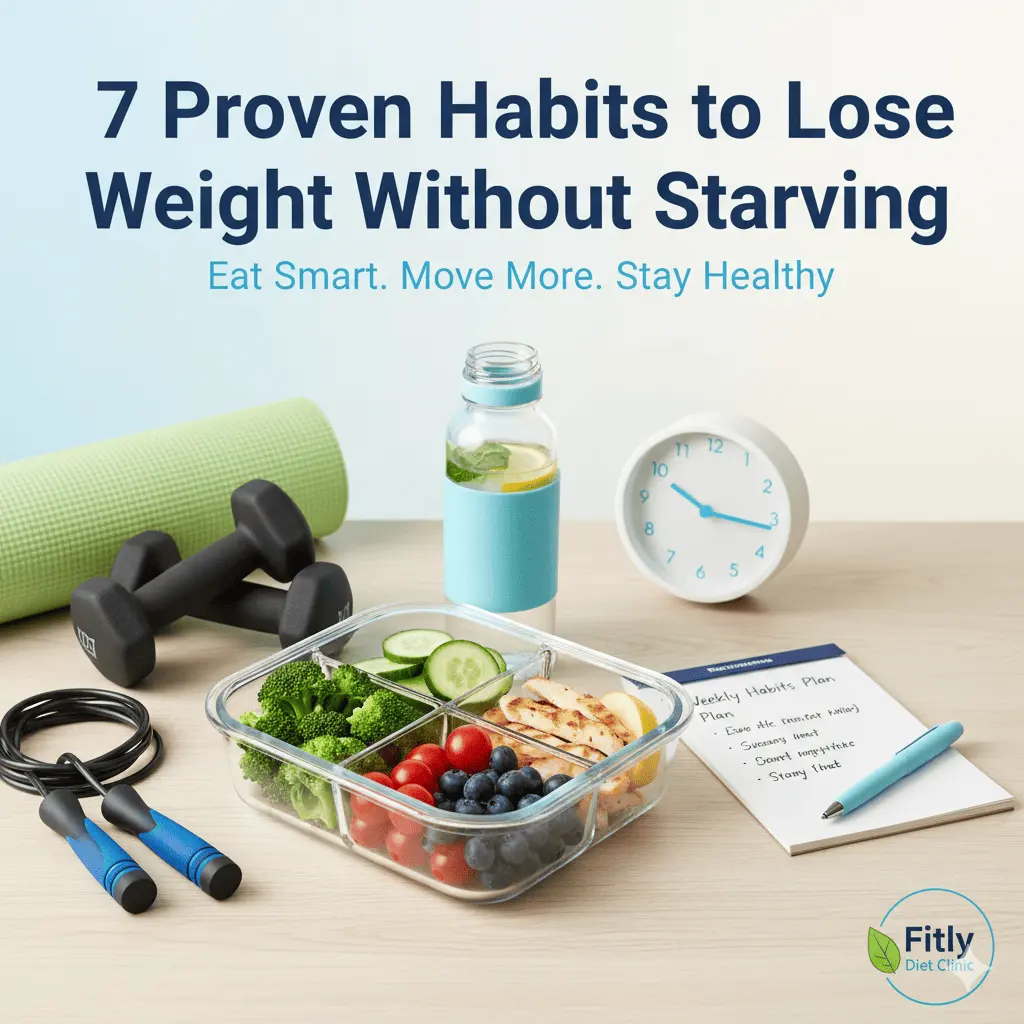
7 Proven Habits That Help You Lose Weight Without Starving
Introduction: Reduce Weight Without Going Without Food
Extreme dieting or starvation are not necessary for weight loss. Smart eating, consistent lifestyle choices, and increasing your metabolism while preserving your energy levels are the key components of sustainable fat loss.
Many people struggle with diets in today’s hectic lives because they feel hungry, exhausted, or don’t consistently stick to their plan. At Fitly Diet Clinic, we think losing weight should be fun, healthy, and manageable.
This blog offers seven habits that have been shown to be beneficial by science:
- Effectively burning fat
- Maintaining lean muscle mass,
- Naturally regulating appetite,
- Satiety and sustaining energy levels throughout the day
1. Eat protein first thing in the morning.
The Significance of Protein in Weight Loss
The building block of muscles, protein aids in fat loss by: preserving lean muscle mass; boosting the thermic effect of food (calories burned during digestion); and inhibiting the hunger hormone ghrelin.
A high-protein breakfast has been shown to decrease mid-morning cravings and calorie intake throughout the day.
Ideas for Protein-Rich Breakfasts
- Eggs and Egg White Omelette: Include bell peppers, tomatoes, and spinach.
- Greek Yogurt with Nuts and Fruits: Rich in probiotics, healthy fats, and protein
- Moong Dal Chilla (lentil pancakes): Low-cost, high-protein, and satisfying
- Oats with Milk & Seeds: For an added protein boost, add chia seeds, flaxseeds, or almonds.
Advice: For longer satiety, mix protein with fiber and complex carbohydrates.
meal plans catered to your protein requirements with our Customized Weight Loss Programs.
2. Sip water prior to meals.
The Impact of Hydration on Weight Loss
Water consumption 15–20 minutes prior to meals can:
- Boost metabolism and detoxification
- Naturally lower caloric intake
- Improve digestion
The metabolism of fat is also influenced by water. 500ml of water increases calorie burn by 30% over 30–40 minutes, according to a study published in the Journal of Clinical Endocrinology & Metabolism.
Some suggestions for increasing water intake include:
- Keeping a water bottle at your desk
- Infusing water with lemon, cucumber, or mint for flavor
- Sipping a glass before snacks or when cravings strike.
According to Healthline, staying hydrated is a simple way to control appetite and support fat loss.
3. Eat Slowly and With Awareness
The Significance of Slow Eating
Since it takes the brain around 20 minutes to register fullness, eating too quickly frequently results in overeating. Additionally, mindful eating enhances digestion and enables you to pay attention to your body’s hunger signals.
How to Eat Mindfully:
- Pay attention to taste, texture, and portion size
- Avoid eating in front of screens (TV, phone, laptop)
- Chew every bite carefully
- Stop eating when you are about 80% full.
Real-World Example: Eat slowly, drink water in between bites, and pay attention to when your hunger is satiated rather than consuming your food in a hurry. Over time, this stops binge eating.
4. Incorporate Foods High in Fiber
Fiber’s Function in Weight Loss
Foods high in fiber help you:
- Feel fuller for longer
- Lower blood sugar spikes
- Enhance gut health
- Naturally consume fewer calories overall.
The following foods are the best sources of fiber:
- whole grains like oats, brown rice, quinoa, and millet
- legumes like kidney beans, chickpeas, and lentils
- fruits like apples, guava, papaya, and oranges
- vegetables like spinach, broccoli, carrots, and bottle gourd.
Quick Fiber Tip:
- Include fruits as a midmorning snack
- include legumes in salads, soups, or curries
- include vegetables in every meal.
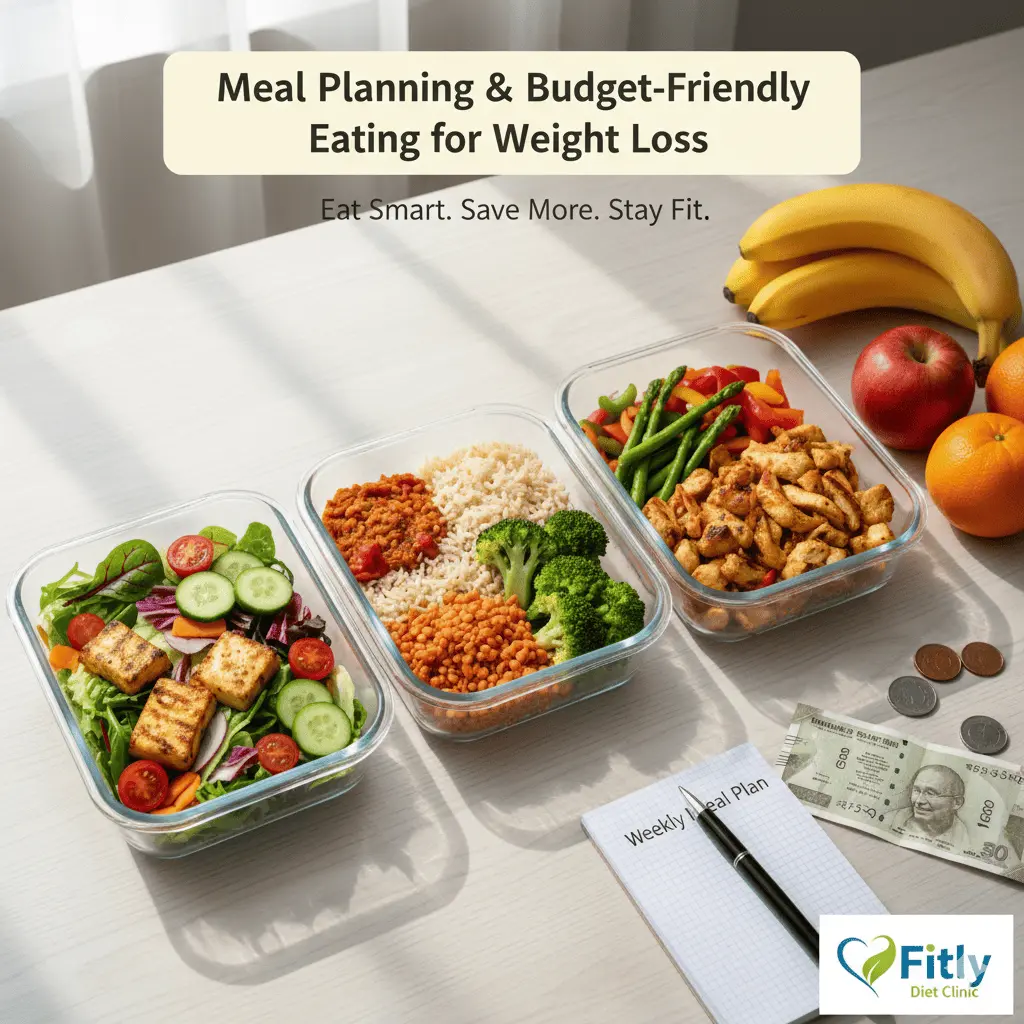
5. Arrange Meals and Snacks in Advance: The Benefits of Meal Planning
Planning meals:
- Lowers consumption of junk food
- Saves time and money
- Ensures healthy options are always available.
How to Prepare Meals Efficiently
- Make a weekly shopping list: Pay attention to inexpensive, in-season ingredients.
- Prepare grains, legumes, and proteins in bulk.
- Divide meals into convenient containers.
Weekly Meal Plan Example
- Breakfast: Oats + fruit
- Mid-morning snack: Nuts or sprouts
- Lunch: Brown rice + lentils + vegetables
- Evening snack: Greek yogurt or roasted chickpeas
- Dinner: Grilled paneer or chicken + salad
6. Move More Throughout the Day
Non-Exercise Activity (NEAT)
Weight loss isn’t just about gym workouts. Everyday activities such as walking, cleaning, or stretching contribute to NEAT calories burned.
Tips to Increase Daily Movement
- Take stairs instead of the elevator
- Walk 5–10 minutes after meals
- Stretch every 1–2 hours
- Include 10–15 minutes of home workouts
Verywell Fit explains how daily movement impacts calories burned and weight management.
Example Mini Home Workout
- 10 squats
- 10 push-ups
- 10 lunges
- 15 jumping jacks
Repeat 2–3 sets, 3–4 times a week
7. Prioritize Sleep and Stress Management
How Sleep Impacts Weight Loss
Poor sleep increases ghrelin (hunger hormone) and decreases leptin (satiety hormone), making weight loss more difficult.
Stress and Weight Gain
High stress raises cortisol, promoting fat storage, especially around the abdomen.
Tips for Better Sleep and Stress Management
- Aim for 7–8 hours of sleep nightly
- Practice deep breathing or meditation
- Avoid late-night snacking
- Maintain a consistent sleep schedule
Tip: Combining sleep management with mindful eating and physical activity yields maximum fat loss results.
Extra Routines for Quicker Outcomes
- Keep a food diary to monitor intake
- Eat 3–4 small balanced meals daily, don’t skip meals
- Use smaller plates to control portions naturally
- Prepare healthy snacks in advance (nuts, boiled eggs, yogurt)
- Track non-scale victories: energy, clothing fit, body measurements
Research and Statistics to Support It
- High-protein breakfasts reduce daily calorie intake by 100–200 calories (American Journal of Clinical Nutrition)
- Drinking water before meals can reduce 75–90 calories per meal (Obesity Journal)
- NEAT activities like walking and stretching can burn up to 2,000 calories per week (Mayo Clinic)
Frequently Asked Questions
A1: Absolutely! By adopting these 7 habits, you can reduce calorie intake naturally while staying satisfied.
A2: Yes, it prevents impulsive eating and ensures consistent calorie control.
A3: Yes, even 10–15 minutes of daily activity helps burn calories and boosts metabolism.
A4: High cortisol levels from stress increase appetite and promote fat storage.
A5: Yes! Visit Fitly Diet Clinic for customized weight loss programs.