
Meal Planning & Budget-Friendly Eating for Weight Loss
The Key to Cost-Effective Weight Loss
You don’t have to break the bank to lose weight. In actuality, planning is more important for long-term weight loss than expensive diets or glitzy ingredients. You can maintain your fitness, save money, and still eat tasty, nourishing meals by mastering the art of meal planning and frugal eating.
At Fitly Diet Clinic, we think that affordability and health are closely related. This guide will help you become an expert at meal planning, portion control, and smart grocery shopping without sacrificing your nutritional or taste objectives, whether you’re a homemaker, student, or busy professional.
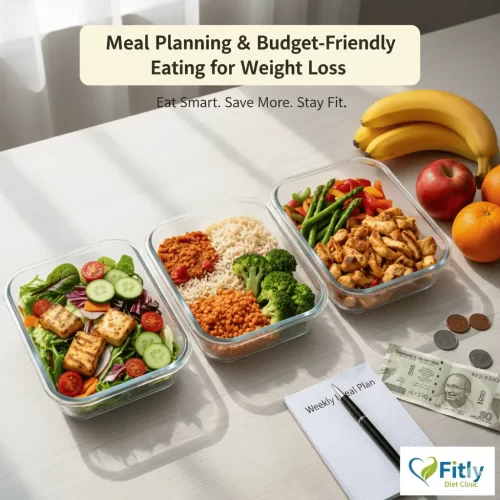
What Meal Planning Is and Why It’s Important for Losing Weight
Choosing your meals for the upcoming days or weeks in advance is known as meal planning. It’s about finding balance and managing your food intake, not just about convenience.
The advantages of meal planning for weight loss include:
- lowering cravings for junk food and impulsive eating;
- making it easier to maintain a calorie deficit;
- promoting nutritional balance (protein, carbs, fats, and fiber);
- saving money and reducing food waste;
- keeping you motivated and consistent.
You’re less likely to reach for unhealthy options when you have nutritious meals prepared. Meal planning is one of the best weight loss techniques because of its consistency.
The Cost-Effective Method: Eat Well, Spend Less
Purchasing pricey organic produce or imported snacks is not the only way to eat healthily. It all comes down to choosing wisely and sensibly.
- Purchase Seasonal and Local
- Produce Local produce is more nutrient-dense, fresher, and less expensive.
- Seasonal produce is 30–50% less expensive when purchased from local markets or vendors.
For instance:
- Watermelon, cucumber, bottle gourd, and spinach in the summer
- Winter foods include sweet potatoes, oranges, cauliflower, and carrots.
- Purchase in Bulk and Store Wisely
- Bulk purchases of staples like oats, rice, lentils, beans, and whole grains can save money.
- To prevent spoiling, store them appropriately in airtight containers.
- Arrange Your Meals to Include Inexpensive Protein Sources
Protein prolongs feelings of fullness and helps maintain muscle mass during weight loss.
Low-cost sources:
- Peanuts, yogurt, paneer, chickpeas, lentils, tofu, and eggs
- Cut Back on Packaged Foods
In addition to being unhealthy, processed foods are more expensive per calorie. You have more control over portion size and nutrition when you cook at home.
- Make Creative Use of Leftovers
Don’t discard food. Repurpose leftovers to make salads, wraps, or soups.
The following day, for instance, leftover grilled chicken can be turned into a high-protein sandwich.
The Mentality of Meal Planning
Making a meal plan helps you make better decisions. You don’t have to ask yourself, “What should I eat next?” all the time.
This mental clarity prevents emotional or impulsive eating and helps you stay focused on your weight loss objectives.
Tip: To plan meals, use a smartphone app or keep a weekly planner.
Step 1: Define Your Weight Loss Goal
Determine your calorie needs using a TDEE calculator or consult a dietitian at Fitly Diet Clinic.
Step 2: Choose Balanced Meals
Each meal should include:
- Protein: eggs, lentils, tofu, fish, paneer
- Complex Carbs: brown rice, oats, quinoa, sweet potato
- Healthy Fats: nuts, seeds, olive oil
- Vegetables/Fruits: fiber, vitamins, antioxidants
Step 3: Create a Weekly Meal Plan
Here’s a sample plan 👇
Day | Breakfast | Lunch | Dinner |
Monday | Oats + banana + chia seeds | Brown rice + dal + salad | Grilled paneer + soup |
Tuesday | Vegetable omelette | Quinoa + chickpeas | Fish curry + brown rice |
Wednesday | Poha with peanuts | Whole wheat roti + veg curry | Stir-fried tofu + veggies |
Thursday | Smoothie (spinach + apple + oats) | Moong dal + rice + curd | Paneer wrap |
Friday | Upma + sprouts | Rajma + brown rice | Chicken salad |
Saturday | Vegetable sandwich | Daliya + dal + sabzi | Soup + multigrain toast |
Sunday | Idli + sambar | Biryani (brown rice) + raita | Vegetable khichdi |
Smart Grocery List for Weight Loss on a Budget
Proteins
Eggs, lentils, chickpeas, tofu, yogurt, paneer, beans, peanuts
Carbohydrates
Brown rice, oats, millets, whole wheat, sweet potatoes
Healthy Fats
Nuts, seeds, olive oil, coconut, avocado (occasionally)
Vegetables
Spinach, carrots, tomatoes, cabbage, bottle gourd, cucumber, cauliflower
Fruits
Banana, apple, orange, papaya, watermelon, guava
Miscellaneous
Herbs, spices, tea, coffee, lemon, honey (for natural sweetness)
How to Prep Meals Like a Pro
Meal prep = cooking once, eating multiple times.
Tips:
- Cook large batches of grains and legumes
- Chop vegetables in advance and refrigerate
- Use airtight boxes to store meals (lasts 3–5 days)
- Label containers with date and meal name
Prepping ahead saves time, reduces decision fatigue, and keeps your diet consistent.
Budget-Friendly Snack Ideas
Snacking can make or break your weight loss journey. Choose these healthy & affordable options:
- Roasted chickpeas or makhana
- Greek yogurt with fruit
- Peanut butter toast
- Sprout chaat
- Homemade popcorn
- Boiled eggs
Don’t Forget Hydration
Sometimes, what feels like hunger is actually dehydration.
Drink at least 2.5–3 liters of water daily.
Add lemon, cucumber, or mint for detox flavor.
Avoid sugary drinks—they add empty calories and hinder fat loss.
Combine Meal Planning with Activity
Even the best diet needs movement.
- Aim for 30–45 minutes of physical activity daily (walking, yoga, HIIT).
- Pair this with your planned meals to maximize fat burn and muscle tone.
Common Mistakes to Avoid
- Skipping meals (leads to overeating later)
- Ignoring portion control
- Relying on “diet” packaged snacks
- Forgetting to track calories or nutrients
- Unrealistic expectations (weight loss is gradual)
Frequently Ask Question
A1. Focus on local, seasonal produce, cook at home, and avoid processed foods.
A2. Yes, it helps you control portions, avoid junk food, and save both time and money.
A3. Eggs, lentils, chickpeas, tofu, and yogurt are affordable, high-protein options.
A4. You can, but rotate vegetables, fruits, and protein sources to keep it balanced and enjoyable.
A5. Our experts create custom diet plans based on your budget, lifestyle, and weight goals.
Conclusion
Weight loss isn’t about expensive superfoods or strict dieting—it’s about discipline, planning, and balance.
With smart meal planning and mindful grocery shopping, you can stay healthy, control your expenses, and reach your fitness goals faster.
At Fitly Diet Clinic, we help you create personalized diet plans that fit your lifestyle, preferences, and budget—because health should be accessible to everyone.