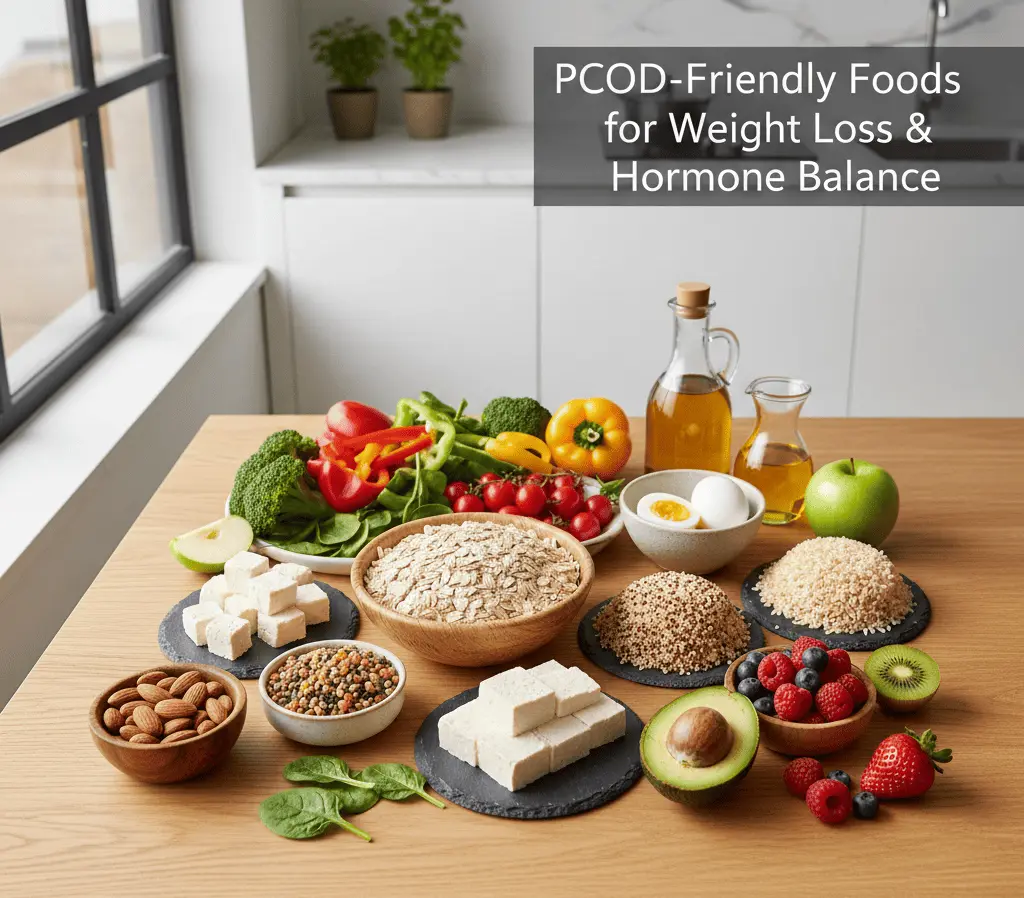
Best Foods for PCOD Weight Loss and Hormone Control
Polycystic Ovarian Disease (PCOD) is a widespread hormonal disorder affecting millions of women worldwide. Common symptoms include weight gain, irregular periods, acne, excessive hair growth, hair thinning, mood swings, and sugar cravings, making PCOD one of the most challenging conditions to manage naturally.
Weight management is often difficult in PCOD due to insulin resistance, high androgen levels, slow metabolism, and hormonal imbalances. This makes diet, exercise, and lifestyle modifications critical for hormone balance, weight control, and long-term health.
A carefully designed PCOD diet focuses on:
- Balancing insulin and blood sugar levels
- Reducing inflammation
- Supporting lean muscle growth
- Promoting healthy weight loss without compromising hormones
In this detailed guide, we’ll explore the best foods for PCOD weight loss and hormone control, including tables, meal plans, lifestyle tips, and FAQs, so you can take control of your health naturally.
Understanding PCOD and Hormonal Imbalance
What is PCOD?
PCOD is a hormonal disorder in which the ovaries produce excess male hormones (androgens), causing irregular ovulation and various metabolic issues.
Symptoms of PCOD
Symptom | Cause / Hormonal Link |
Irregular periods | High androgens, ovulation issues |
Weight gain | Insulin resistance, slow metabolism |
Belly fat | Cortisol & androgen imbalance |
Acne & oily skin | Excess androgens |
Excess hair growth | Androgen imbalance |
Hair thinning | Hormonal imbalance |
Mood swings & fatigue | Insulin resistance + hormone fluctuation |
Hormones Affected
Hormone | Role in PCOD |
Insulin | Resistance leads to fat storage and sugar cravings |
Androgens | Hair growth, acne, irregular cycles |
Estrogen | Low or imbalanced levels disrupt menstruation |
Progesterone | Low levels affect ovulation |
Insight: Insulin resistance is the most common culprit for weight gain in PCOD. Controlling insulin via diet is key to managing symptoms naturally.
Why Weight Loss is Difficult in PCOD
- Insulin Resistance: Cells don’t respond properly, causing fat storage.
- Hormonal Imbalance: High androgen levels lead to belly fat accumulation.
- Slow Metabolism: Chronic inflammation reduces calorie burning efficiency.
- Cravings & Appetite Fluctuations: Insulin spikes trigger sugar cravings.
Role of Diet in PCOD
Diet plays a central role in managing PCOD. The right foods can balance hormones, control insulin, reduce inflammation, and support weight loss.
Macronutrients and Their Role
Nutrient | Role in PCOD | Sources |
Protein | Builds muscle, controls cravings, supports insulin balance | Paneer, tofu, lentils, eggs, fish |
Carbs | Energy; focus on low GI for blood sugar control | Oats, quinoa, brown rice, millets |
Fats | Hormone production, anti-inflammatory | Olive oil, nuts, seeds, avocado |
Fiber | Slows digestion, reduces insulin spikes | Vegetables, fruits, whole grains |
Common PCOD Diet Mistakes
Mistake | Effect |
Crash dieting | Slows metabolism, increases cravings |
High sugar intake | Insulin spikes, weight gain |
Low protein intake | Muscle loss, slower metabolism |
Avoiding all carbs | Hormone imbalance, low energy |
Processed food overconsumption | Inflammation & fat accumulation |
PCOD Diet Principles
- Eat low-GI carbs paired with protein and fiber.
- Include healthy fats in every meal.
- Consume anti-inflammatory foods like turmeric, ginger, and leafy greens.
- Avoid refined sugars and processed foods.
- Maintain consistent meal timings to stabilize insulin.
High-Fiber Foods
Fiber is essential for blood sugar control, weight management, and hormone balance.
High-Fiber Foods Table
Category | Foods | Benefits |
Whole grains | Oats, brown rice, quinoa | Slows digestion, controls insulin |
Seeds | Chia seeds, flaxseeds | Omega-3, anti-inflammatory |
Vegetables | Broccoli, spinach, carrots | High fiber, nutrient-dense |
Fruits | Apple, pear, berries | Low GI, antioxidant-rich |
Legumes | Lentils, chickpeas, kidney beans | Satiety, protein + fiber |
Tip: Include fiber in every meal to prevent insulin spikes and reduce cravinngs.
Protein-Rich Foods
Protein helps build lean muscle, control hunger, and regulate hormones.
Protein Sources Table
Vegetarian | Non-Vegetarian | Portion Recommendation |
Paneer (low-fat) | Eggs | 100–150g per meal |
Tofu | Fish (salmon, sardines) | 100–150g per meal |
Lentils & dals | Chicken (lean) | 100g cooked |
Greek yogurt | — | 150–200g |
Soybeans | — | 50–75g |
Low GI Carbs
Low-GI carbs digest slowly, stabilizing blood sugar and preventing fat gain.
Low GI | High GI (Avoid) |
Sweet potato | White potato |
Millets (ragi, jowar, bajra) | White rice |
Brown rice | Maida / refined flour |
Whole wheat roti | White bread |
Oats | Sugary cereals |
Healthy Fats
Fats are essential for hormone production and reducing inflammation.
Food | Benefits |
Almonds | Hormone balance, satiety |
Walnuts | Omega-3, reduces inflammation |
Olive oil | Anti-inflammatory, heart health |
Avocado | Insulin sensitivity |
Coconut (moderate) | Energy support |
Anti-Inflammatory Foods
PCOD is linked with chronic inflammation, which worsens insulin resistance.
Food | PCOD Benefit |
Turmeric | Hormone balance, anti-inflammatory |
Ginger | Digestive support |
Garlic | Insulin regulation |
Green tea | Fat burning, antioxidant-rich |
Leafy greens | Detox support |
Fruits for PCOD
Choose low-sugar fruits to avoid insulin spikes.
Recommended | Limit |
Apple | Banana |
Berries | Mango |
Kiwi | Grapes |
Guava | Chikoo |
Papaya (moderate) | Pineapple |
Gut-Healthy Foods
A healthy gut improves hormone balance and insulin sensitivity.
Food | Benefits |
Curd / Yogurt | Probiotics, gut flora support |
Buttermilk | Digestion |
Fermented foods | Gut microbiome health |
Fiber-rich vegetables | Satiety, detox support |
Meal Planning
Sample PCOD-Friendly Meal Plan
Meal | Example |
Breakfast | Oats with chia seeds, berries, Greek yogurt |
Mid-Morning | Handful of nuts + green tea |
Lunch | Brown rice / millet roti + dal + vegetable curry + curd |
Afternoon Snack | Roasted chickpeas / fruit |
Dinner | Tofu / paneer / fish + sautéed vegetables + salad |
Lifestyle & Exercise
- Exercise improves insulin sensitivity and supports weight loss
- Recommended: Cardio, strength training, yoga
- Stress management is crucial (meditation, deep breathing)
- Sleep 7–8 hours/day to regulate hormones
Supplements & Herbal Support
Supplement / Herb | Benefits | Notes |
Inositol | Improves insulin sensitivity | Consult doctor for dosage |
Omega-3 | Reduces inflammation | Fish oil or flaxseed oil |
Vitamin D | Hormone regulation | Blood level check recommended |
Cinnamon | Controls blood sugar | Add to breakfast or tea |
Fenugreek | Insulin regulation | Can be soaked or powdered |
Common PCOD Myths
Myth | Truth |
Crash diet cures PCOD | Crash diets slow metabolism and worsen hormones |
Fruits should be avoided | Low-sugar fruits are beneficial |
Exercise alone can reverse PCOD | Diet + exercise + lifestyle changes needed |
Only medication works | Diet and lifestyle interventions have proven benefits |
Frequently Asked Questions
High-fiber, protein-rich foods, low-GI carbs, and healthy fats.
Yes, with consistent diet and lifestyle changes.
Yes, focus on low-sugar fruits like berries, apple, and guava.
Diet significantly helps, but lifestyle support is essential.
Visible results usually appear in 8–12 weeks with consistent effort.
Conclusion
Managing PCOD requires a holistic approach:
- Eat high-fiber, protein-rich, low-GI carbs, and healthy fats
- Avoid processed foods and sugar
- Maintain consistent meal timings
- Exercise regularly
- Manage stress and sleep well