Iron-Rich Diet Plan for Women with Low Energy
Low energy, constant fatigue, dizziness, and weakness are common problems faced by many women today. One of the biggest reasons behind this is iron deficiency, which can lead to anemia and significantly affect daily life.
If you often feel tired even after resting, struggle with concentration, or experience hair fall and pale skin, your body may be lacking sufficient iron. The good news is that a well-planned iron-rich diet plan for women can help restore energy levels, improve hemoglobin, and support overall health naturally.
In this detailed guide, we will cover everything you need to know about iron deficiency, best foods to include, foods to avoid, and a practical diet plan to boost your energy.
Why Iron is Important for Women’s Health
Iron is an essential mineral that helps in the production of hemoglobin, a protein in red blood cells that carries oxygen throughout the body. When iron levels are low, oxygen supply decreases, leading to fatigue and weakness.
Women are more prone to iron deficiency due to:
- Menstrual blood loss
- Pregnancy and breastfeeding
- Poor dietary intake
- Hormonal imbalances
A proper iron-rich diet plan ensures that your body receives enough nutrients to maintain energy and vitality.
Signs of Iron Deficiency in Women
Recognizing symptoms early can help prevent complications.
- Constant fatigue and low energy
- Pale skin
- Hair fall and brittle nails
- Shortness of breath
- Dizziness and headaches
- Cold hands and feet
- Poor concentration
If these symptoms persist, improving your diet for low iron levels becomes essential.
Types of Iron in Food
Understanding the two types of iron helps in better absorption:
Type of Iron | Source | Absorption Level |
Heme Iron | Animal foods (meat, fish, eggs) | High absorption |
Non-Heme Iron | Plant foods (spinach, lentils) | Moderate absorption |
Combining plant-based iron with vitamin C-rich foods enhances absorption significantly.
Best Iron-Rich Foods for Women
Including a variety of foods ensures balanced nutrition.
Plant-Based Iron Sources
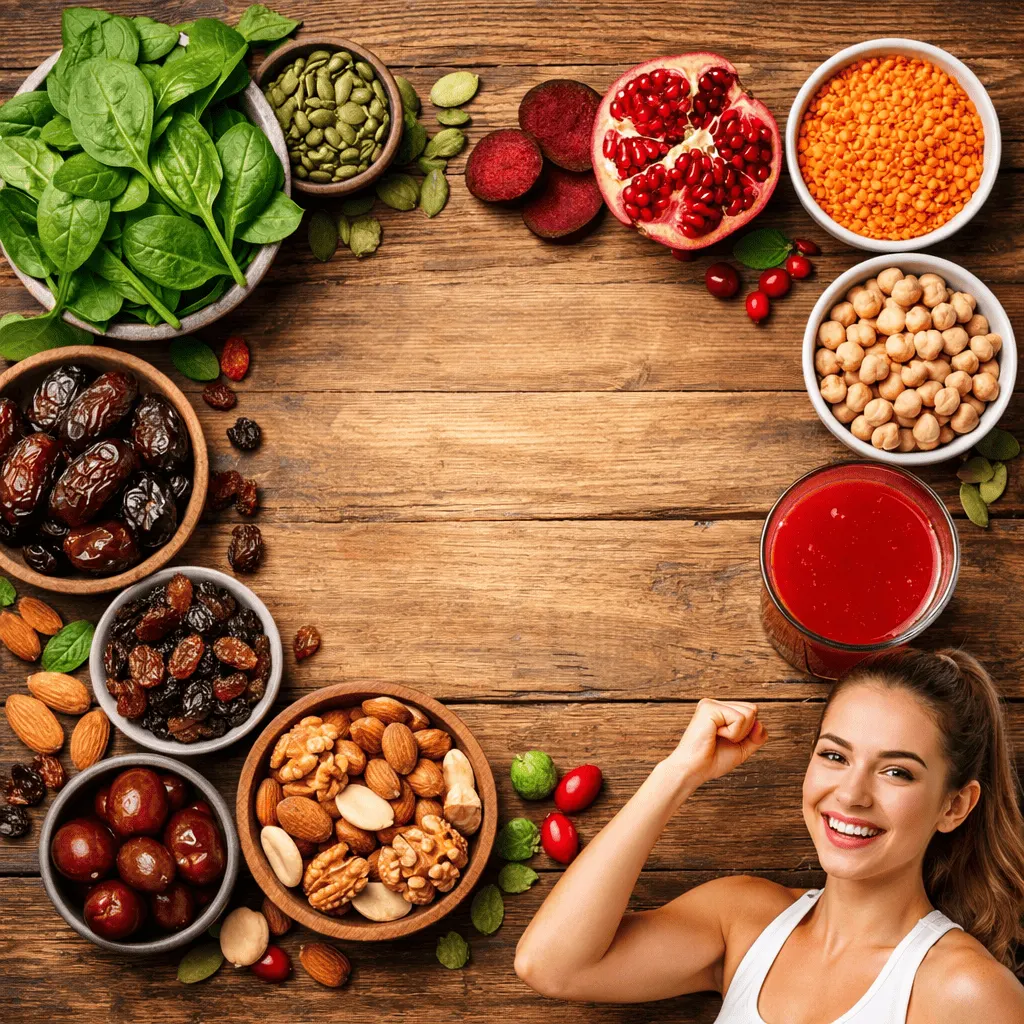
- Spinach and leafy greens
- Lentils (dal)
- Chickpeas
- Tofu
- Pumpkin seeds
- Sesame seeds (til)
- Jaggery (gur)
Animal-Based Iron Sources
- Eggs
- Chicken
- Fish
- Red meat (in moderation)
Vitamin C Foods (for Better Absorption)
- Oranges
- Lemon
- Amla
- Tomatoes
- Bell peppers
Iron-Rich Diet Plan for Women with Low Energy
A structured meal plan helps maintain consistent iron intake throughout the day.
Morning (Empty Stomach)
Start your day with warm water and lemon or amla juice to improve iron absorption and digestion.
Breakfast
A balanced breakfast should include iron + protein + vitamin C.
Example:
Vegetable poha with peanuts + orange juice
OR
Oats with seeds + fruits
Mid-Morning Snack
Choose iron-rich light snacks:
- Apple with peanut butter
- Handful of almonds and raisins
- Coconut water
Lunch
Lunch should be nutrient-dense and balanced.
Example:
Component | Food |
Grain | Multigrain roti / brown rice |
Protein | Dal / chicken / paneer |
Vegetable | Spinach or beetroot sabzi |
Salad | Lemon-dressed salad |
Evening Snack
- Roasted chana
- Herbal tea
- Sprouts salad
Dinner
Keep dinner light but nutrient-rich.
Example:
Vegetable soup + paneer/tofu + sautéed greens
Bedtime
- Warm milk with a pinch of turmeric
OR - Soaked raisins
Foods to Avoid with Iron-Rich Diet
Some foods can block iron absorption if consumed together:
Avoid | Reason |
Tea / coffee with meals | Reduces iron absorption |
Excess calcium | Competes with iron |
Processed foods | Low nutrient density |
High sugar foods | Causes energy crashes |
Tips to Improve Iron Absorption Naturally
To get maximum benefit from your iron-rich diet plan, follow these tips:
- Combine iron foods with vitamin C
- Avoid tea/coffee immediately after meals
- Use iron cookware (like cast iron pans)
- Include fermented foods for better digestion
- Stay hydrated
Lifestyle Tips to Boost Energy
Along with diet, lifestyle also matters:
- Maintain regular sleep schedule
- Practice light exercise (walking, yoga)
- Manage stress levels
- Avoid skipping meals
Who Needs an Iron-Rich Diet the Most?
This diet is especially beneficial for:
- Women with anemia
- Teenage girls
- Pregnant women
- Lactating mothers
- Women with heavy periods
- Vegetarians with low iron intake
Frequently Asked Questions
It may take 4–8 weeks with proper diet and consistency.
Yes, but only under medical guidance.
Dates, raisins, and pomegranate are good sources.
No, a balanced diet with multiple sources is required.
Indirectly, yes. Low energy may reduce physical activity.
Final Thoughts
Low energy in women is often a sign that the body needs better nutrition. A well-planned iron-rich diet plan for women with low energy can significantly improve stamina, focus, and overall health.
By including iron-rich foods, enhancing absorption with vitamin C, and maintaining a balanced lifestyle, you can overcome fatigue naturally and feel more energetic every day.
Consistency is the key. Small daily changes in diet can lead to big improvements in your health and energy levels.