Introduction: Diet and Lifestyle: The Secret to Managing PCOS
Millions of women worldwide suffer from a hormonal condition known as polycystic ovarian syndrome, or PCOS. PCOS is more than just irregular periods; it can also affect fertility, increase hair growth, lead to acne, cause weight gain, and even increase the risk of heart disease and diabetes.
Hormonal imbalance, particularly with regard to insulin and androgens (male hormones), is one of the main issues that women with PCOS deal with. Research shows that diet and lifestyle modifications are the most effective way to naturally control PCOS, even though medications can help manage symptoms.
Customized diet plans for women with PCOS are our specialty at Fitly Diet Clinic – Your Complete Guide to Nutrition, Lifestyle & Wellness. These programs focus on long-term hormonal balance, enhanced quality of life, and symptom control.
What is PCOS and Why Diet Is Important
PCOS is mostly associated with:
- nsulin resistance: This condition causes the body’s cells to not react to insulin as well, which raises blood sugar levels and causes weight gain.
- Hormonal imbalance: Acne, hair growth, and infertility are caused by elevated androgens.
- Inflammation: Prolonged low-grade inflammation exacerbates symptoms.
A diet is necessary because
- Foods with a high glycemic index (GI) raise blood sugar levels and exacerbate insulin resistance.
- Processed foods and unhealthy fats make inflammation worse.
- Hormone regulation, ovulation, and weight management are all supported by balanced, nutrient-rich foods.
Visit our Pillar Page for a more comprehensive look at how nutrition promotes health.
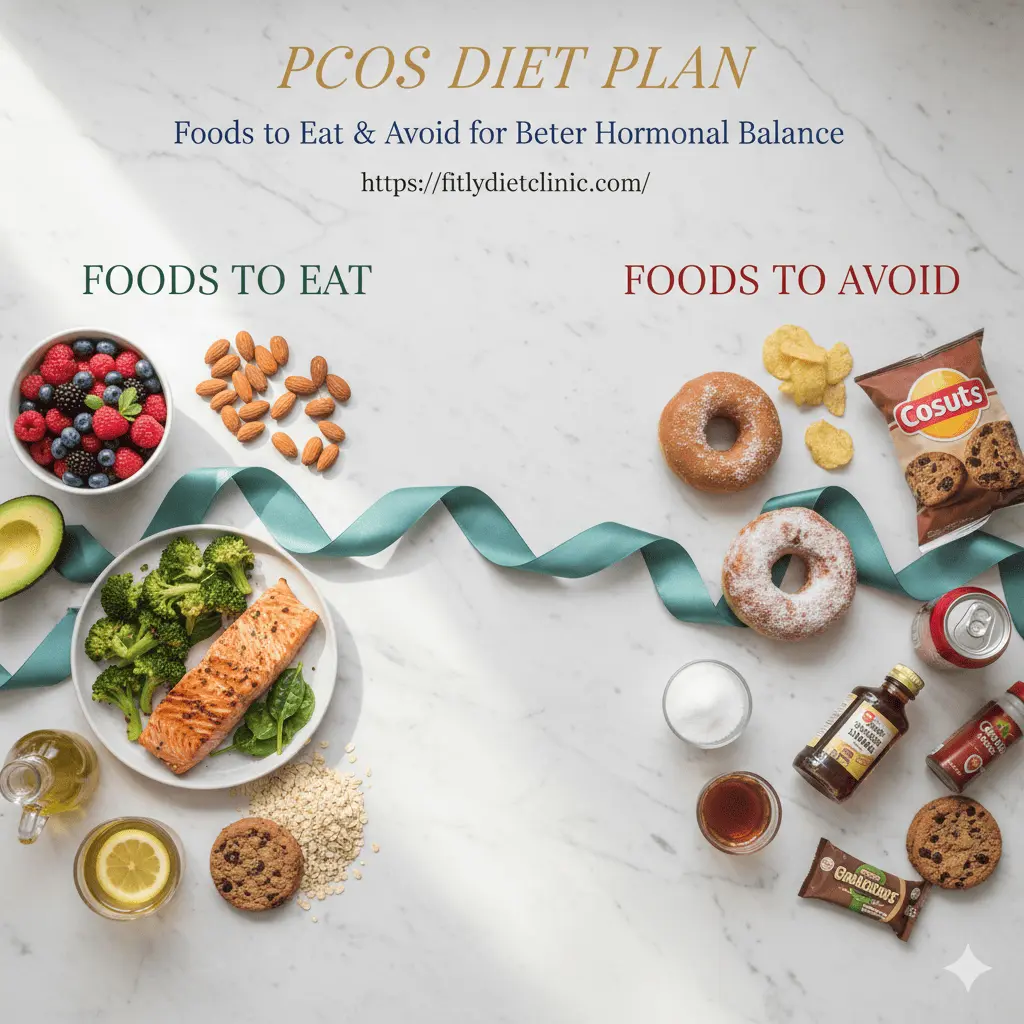
PCOS Dietary Foods
1. The Insulin Balancers: High-Fiber Foods
Fiber slows down digestion and keeps blood sugar levels from rising too quickly. This promotes weight loss, improves gut health, and manages insulin resistance.
For instance:
- Fruits: berries, apples, pears, and oranges
- Vegetables: broccoli, spinach, kale, and cauliflowe
- Whole grains: oats, brown rice, and quinoa
- Legumes: lentils, beans, and chickpeas
2. The Hormone Supporters: Lean Proteins
Protein increases metabolism, maintains muscle health, and balances blood sugar.
For instance:
- Eggs
- Lean chicken and turkey;
- fish (salmon, tuna, and mackerel);
- plant proteins (lentils, tofu, edamame, and beans)
Advice 👉 To slow the release of glucose, combine protein with carbohydrates high in fiber.
3. Hormonal Regulators: Good Fats
Not all fats are harmful. The proper fats lower inflammation and promote the synthesis of hormones.
- Examples include:
- Avocado
- nuts and seeds (walnuts, chia seeds, flaxseeds, and pumpkin seeds)
- coconut and olive oils.
- Fatty fish, such as mackerel and sardines
4. The Sugar Controllers: Low Glycemic Index (GI) Foods
Foods with a low GI release energy gradually, avoiding insulin spikes.
Examples
- include using whole wheat chapati in place of white bread
- sweet potatoes in place of white potatoes.
- Green leafy vegetables in place of refined rice
- Quinoa
5. Foods That Reduce Inflammation: A Guide
One of the hidden causes of PCOS symptoms is inflammation. Anti-inflammatory foods help lessen fatigue, bloating, and acne.
Examples include
- tomatoes
- ginger
- garlic
- turmeric
- green tea
- dark leafy greens.
Avoidable Foods for PCOS
1. Sugar and refined carbohydrates
These foods exacerbate insulin resistance and raise blood sugar levels.
- Pastries, pasta, and white bread
- Sugary beverages
- Cereals that have been processed
2. Junk and processed foods
These foods encourage inflammation and weight gain because they are high in sodium and bad fats.
- Burgers, fries, and pizza
- Packaged snacks, instant noodles, and chips
3. Dairy (sometimes)
Dairy products can cause hormonal imbalances and increased acne in certain women. Try oat milk, soy milk, or almond milk as substitutes.
4. Processed and Red Meats
connected to increased inflammation. Limiting is the best course of action.
- Hot dogs, sausages, and bacon
- High-fat pork or beef
5. Too Much Alcohol and Caffeine
Increases the stress hormone cortisol, which exacerbates PCOS symptoms.
Key Nutrients in PCOS:
Magnesium (found in spinach, almonds, and pumpkin seeds): Enhances insulin sensitivity
- Vitamin D: Controls fertility and the menstrual cycle (sunlight, fortified milk, salmon)
- Omega-3 fatty acids: Cut down on androgens and inflammation (fish oil, chia seeds, walnuts)
- Zinc: Found in chickpeas, oysters, and pumpkin seeds; aids in acne and hair growth.
- Iron: Handles heavy meals (lentils, lean meat, and spinach).
Examples of PCOS Diet Plans
👉 One-Day Indian PCOS Diet Plan
- Breakfast: Vegetable oats upma with flaxseeds + green tea
- Mid-Morning Snack: Apple slices + handful of almonds
- Lunch: Brown rice + dal + grilled paneer + spinach sabzi
- Evening Snack: Roasted chana + herbal tea
- Dinner: Grilled fish or tofu + quinoa + sautéed broccoli
Western PCOS Diet Plan
- Breakfast: Overnight oats with chia seeds & berries
- Mid-Morning Snack: Boiled egg + walnuts
- Lunch: Grilled chicken with quinoa & kale salad
- Evening Snack: Hummus with cucumber & carrot sticks
- Dinner: Baked salmon + sweet potato + asparagus
Lifestyle Changes to Support PCOS Diet
- Exercise daily – walking, yoga, HIIT, strength training
- Prioritise sleep – 7–8 hours reduces cortisol & insulin resistance
- Stress management – meditation, journaling, deep breathing
- Hydration – 2–3 litres water daily
According to the Mayo Clinic, nutrition and weight management remain the first-line treatment for PCOS before medications. This proves how critical diet is in reversing symptoms.
FAQs on PCOS Diet Plan
No, but diet can significantly reduce symptoms and restore hormonal balance.
Yes, but only if guided by an expert. It may improve insulin sensitivity in some women.
Berries, pears, apples, and citrus fruits are ideal due to their low GI.
Not always. Some tolerate dairy, but if acne worsens, switch to plant-based alternatives.
A balanced, sustainable diet works better long term than extreme diets like keto.
What Our Client Say
In conclusion
Although PCOS can feel overwhelming, you can take back control of your health with the correct dietary approach. Lean proteins, healthy fats, fiber-rich foods, and anti-inflammatory meals promote hormone balance, cycle regulation, and weight management.
We at Fitly Diet Clinic – Your Complete Guide to Nutrition, Lifestyle & Wellness offer personalized PCOS diet plans based on your physical characteristics, way of life, and health requirements. Our strategy is result-driven, scientifically grounded, and sustainable.
👉 Make an appointment with Fitly Diet Clinic to begin your transformation and take the first step toward hormonal balance right now.