Pre-Workout vs Post-Workout Meals: What’s Better?
When it comes to fitness, exercise is only half the equation — nutrition before and after your workout plays a huge role in your results. Many people ask:
Should I eat before workout or after?
Which is more important — pre-workout meals or post-workout meals?
The truth is, both pre-workout and post-workout nutrition are important, but they serve different purposes in muscle gain, fat loss, strength, and recovery.
In this guide, we’ll break down pre-workout vs post-workout meals, their benefits, what to eat, and how to plan your meals for the best fitness results.
Why Workout Nutrition Matters
Your body needs fuel to perform and nutrients to recover.
- Pre-workout meals provide energy and improve performance
- Post-workout meals help muscle recovery and growth
Without proper nutrition, you may experience:
- Fatigue during workouts
- Poor muscle recovery
- Muscle loss
- Slow fat loss progress
That’s why understanding workout meal timing is key for better results.
What Is a Pre-Workout Meal?
A pre-workout meal is food eaten 30 minutes to 2 hours before exercise to give your body enough energy to perform well.
Goals of Pre-Workout Nutrition
✅ Increase energy levels
✅ Improve endurance and strength
✅ Prevent muscle breakdown
✅ Enhance workout performance
What Happens If You Skip a Pre-Workout Meal?
Training on an empty stomach may lead to:
- Low energy
- Dizziness or weakness
- Poor performance
- Muscle breakdown instead of fat loss
Especially for strength training and intense cardio, pre-workout nutrition is important.
Best Nutrients for Pre-Workout Meals
Nutrient | Why It’s Important |
Carbohydrates | Main energy source for workouts |
Protein | Prevents muscle breakdown |
Healthy fats (small amount) | Sustained energy (optional) |
Fluids | Prevent dehydration |
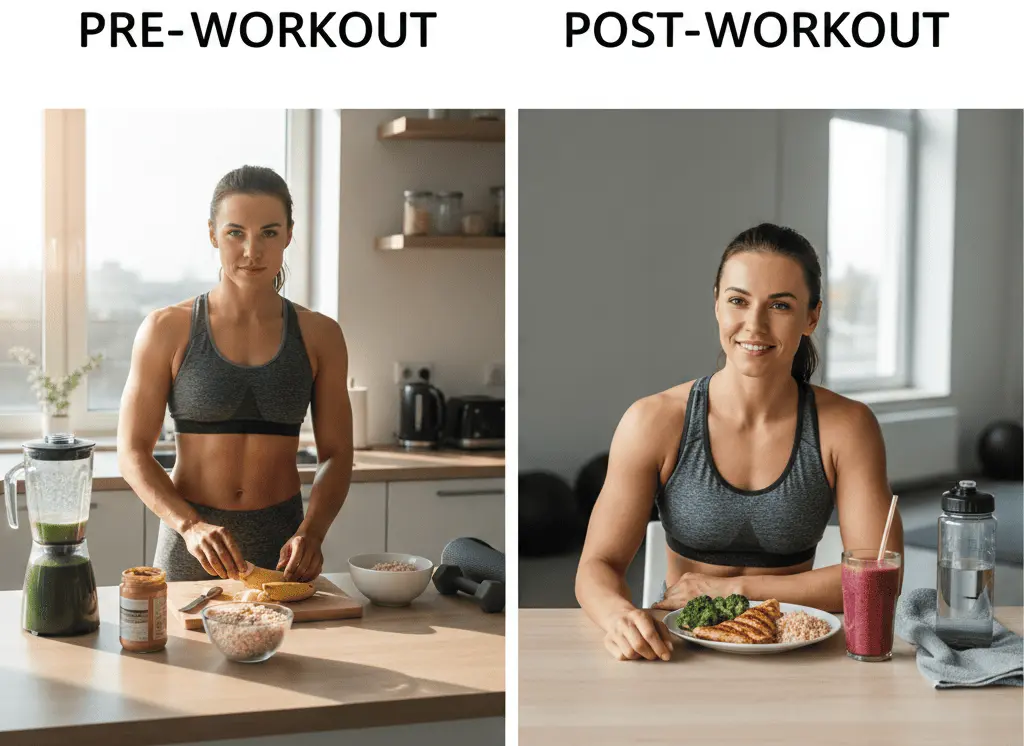
Best Pre-Workout Meal Ideas
If You Have 2 Hours Before Workout
- Brown rice + vegetables + paneer/tofu
- Oats with peanut butter and banana
- Whole wheat sandwich with egg or hummus
If You Have 30–60 Minutes Before Workout
- Banana with peanut butter
- Apple + handful of nuts
- Yogurt with fruits
- Protein smoothie with banana
These foods provide quick energy and support muscle performance.
What Is a Post-Workout Meal?
A post-workout meal is eaten within 30–60 minutes after exercise to help the body recover and rebuild.
Goals of Post-Workout Nutrition
✅ Repair muscle tissue
✅ Promote muscle growth
✅ Restore energy stores
✅ Reduce muscle soreness
Why Post-Workout Meals Are Crucial
After exercise, your body is in recovery mode. Muscles are slightly damaged and glycogen (stored energy) is depleted.
Without proper post-workout nutrition:
- Muscle recovery slows
- Fatigue increases
- Muscle gain becomes difficult
- You may feel sore for longer
This is why many experts say post-workout meals are critical for muscle building.
Best Nutrients for Post-Workout Meals
Nutrient | Role in Recovery |
Protein | Repairs and builds muscles |
Carbohydrates | Restores glycogen (energy) |
Electrolytes | Replace minerals lost in sweat |
Fluids | Rehydration |
Best Post-Workout Meal Ideas
Vegetarian Options
- Paneer bhurji + roti
- Dal + rice + salad
- Tofu stir-fry with veggies
- Protein smoothie with milk + banana
Non-Vegetarian Options
- Grilled chicken + sweet potato
- Boiled eggs + toast
- Fish + brown rice
These meals support muscle recovery and growth after workouts.
Pre-Workout vs Post-Workout Meals: Key Differences
Factor | Pre-Workout Meal | Post-Workout Meal |
Purpose | Energy & performance | Recovery & muscle growth |
Timing | Before exercise | After exercise |
Focus Nutrient | Carbohydrates | Protein + Carbs |
Benefit | Improves stamina | Reduces soreness |
Needed For | Strength & endurance | Muscle repair |
Which Is More Important: Pre or Post Workout Meal?
The answer depends on your goal.
For Energy & Performance → Pre-Workout Meal is Key
You can’t train well without fuel.
For Muscle Gain & Recovery → Post-Workout Meal is Critical
Muscles grow during recovery, not during exercise.
Best Approach → Both Meals Matter
For optimal results, combine pre-workout nutrition + post-workout recovery meals.
Meal Timing Based on Fitness Goals
Muscle Gain
- Pre-workout: Carbs + Protein
- Post-workout: High Protein + Carbs
Fat Loss
- Pre-workout: Light carbs + protein
- Post-workout: Protein-rich, moderate carbs
Endurance Training
- Pre-workout: Higher carbs
- Post-workout: Carbs + protein + electrolytes
Common Mistakes to Avoid
❌ Working out on an empty stomach (low performance)
❌ Eating heavy fried food before workout
❌ Skipping protein after workout
❌ Delaying post-workout meal for hours
❌ Only taking supplements but ignoring real food
Do You Need Supplements?
Supplements are optional. Real food works well.
Supplement | Useful For |
Whey protein | Quick post-workout protein |
Creatine | Strength and power |
BCAAs | Long workouts (optional) |
Food should always be the foundation of your workout nutrition plan
Hydration Is Also Important
Both pre and post workout hydration matters.
- Drink water 30–60 minutes before workout
- Sip water during exercise
- Rehydrate after workout
Dehydration reduces performance and slows recovery.
Signs Your Workout Nutrition Is Poor
- Constant fatigue
- Muscle soreness lasting days
- No strength improvement
- Hair fall or weakness
- Poor muscle gain
Improving pre-workout and post-workout meals can fix many of these issues.
FAQs: Pre-Workout vs Post-Workout Meals
Light cardio may be okay, but strength training needs fuel.
Within 30–60 minutes for best recovery.
Yes, it’s a great quick carb source.
Try to eat as soon as possible; don’t delay for hours.
Not necessary, but convenient.
Final Verdict
When comparing pre-workout vs post-workout meals, it’s not about choosing one — it’s about using both strategically.
Pre-workout meals fuel performance
Post-workout meals build and repair muscles
If you want better strength, fat loss, endurance, and muscle gain, proper workout nutrition is just as important as exercise.
Eat smart, train hard, and recover well — that’s the real fitness formula